Showing posts with label sewing things. Show all posts

Wednesday, November 27, 2019

Ornaments -- more obstacles to overcome


Last week I finally came up with a plan for my annual Christmas ornaments, and delegated my daughter-in-law to buy some white wool felt for me.  Yes, I was planning to not only use felt, but felt the felt -- I had some bits and pieces of other colored wool felt left from previous projects and thought I would needle-felt them together onto the white background.

But first I had to find my needle-felting tool.  It had been in my work box for months, at the ready in case I wanted to felt up a miniature for my daily art project.  Toward the end of summer I decided to police up the studio, and I put the needle-felting tool away. 

Bad plan. 

Where is "away"?

I spent all day Tuesday trying to find the tool.  Meanwhile, I put away many, many, many other things that I found in the studio that didn't belong out on the worktables.  Lots of fabric and thread that needed to be folded up and stowed back in the drawers.  Lots of open boxes of whatever that could be closed up and put back on the shelves.  Lots of stuff that could be thrown away.  But no needle-felting tool.

This morning I went out to buy a new one.  At only the second store, I found one!  I read the back of the package to re-familiarize myself with how it works.  The barbed needles are encased in a protective floating plastic sheath so you don't stab yourself.  To use it, turn the sheath to the Unlock position and when you press down on the handle, the sheath will stop when it hits the surface of the felt, while the needles continue to penetrate and felt the wool. 


Except my sheath wouldn't stay in the Unlock position, with the red market dots aligned.  It popped back an eighth of an inch, just enough so the needles couldn't float free and penetrate the wool.  (This photo, of course, is upside down -- when you use the tool the needles point down into the felt and the handle is up in your hand.)

After some muttering and cussing I decided that I could just wire the sheath open.  It wouldn't pass the user safety test, but it should allow me to finish my project.

So finally I started to apply the needles to the felt.  But after at least a minute of energetic stabbing, I realized that the two pieces of wool weren't adhering to another at all.  Hmmm.  I tried some other bits of wool and they didn't work either. 

By now I had spent a full work day in the studio, plus a half day of shopping, and still didn't have a thing to show for it.  Time to go to Plan G, or whatever letter I had reached. 

So I sewed the two pieces of felt together instead of felting them.  In two more hours of studio time I got almost one quarter of my ornaments well underway.  Finally, a plan that is working.

For which I am thankful.

PS I guess you have all been busy grocery shopping and baking pies for the holiday, instead of reading blogs.  I am extending my offer to give away an ornament to a reader who leaves a comment until Monday.  And now that you know that the ornament is going to be made of felt but sewed together, I bet you really, really want one.


Monday, June 25, 2018

At the craft store


I was teaching a workshop on hand-stitching over the weekend and had to provide all the materials, so I went to the store to pick up a new supply of embroidery needles.  When I think that centuries ago, a woman might own only two needles in her lifetime, I feel a great culture shock.  I go through needles by the dozens; not that I lose them, but they mysteriously distribute themselves among my various sewing kits, pincushions, pin dishes, embroidery bags and so forth, and occasionally go to live with my friends and family.

I picked up a couple of packs of needles in the sewing department, along with some fabric, and then went toward the yarn/embroidery section to get a new bag of floss.  And to my surprise, found the same embroidery needles in a different color package, with a different logo -- and a considerably lower price.


That's right, in the sewing department, 12 needles for $2.49; in the embroidery department, 16 needles for $1.79!

In the immortal words of Smokey Robinson, you better shop around.

Monday, March 5, 2018

My new toy


One of my wonderful daughters-in-law gave me a present the other day.  She had been at a weaving workshop and got the chance to buy a leather bracelet that is also a tape measure.  It wraps around your wrist twice with just enough slack so you barely notice it's there.  Unwrapped, it's 17 inches long (or 40 cm).

She said she thought I might find this useful.  And she was so right -- not even two hours later, I was walking down the street with two of my gallery colleagues, looking at the temporary vinyl signs that a neighboring business had hung on its fence.  We were thinking about signs, and somebody said "How tall do you think that sign is?  Maybe 24 inches or so?"  I started to eyeball it, and then I remembered!

"WAIT!  Look what my daughter-in-law just gave me!!"  I whipped it off my wrist and measured the sign (it was 30 inches).  Rarely has a gift meant to be useful proven its worth in such a short time!

Having never seen an accessory like this before, I was surprised to see, the very next day, the same bracelet on the arm of a friend of mine whom I saw at an art fair.  Synchronicity in the universe!   (She thought she was ordering the same color that I have, but it came pale and raw.  Since she dyes things for a living, she just dunked the leather in some red dye and got this beautiful coral.)

I plan to continue wearing mine every day.  Who knows how frequently it will be whipped into action -- I suspect quite a bit.  Thank you Kristin!!  I'm so glad we married you.

Wednesday, November 29, 2017

Etsy and old thread


I don't know much about Etsy, having neither bought nor sold there, but Leigh's comment on my last post seems to ring true.  She wrote: "In some ways, that stack of thread is symbolic of exactly what Etsy has come to be.  Some guy who doesn't know jack about handcrafts trying to exploit the "warm fuzzy handmade" image to make a quick buck..."  If you either buy or sell on Etsy I recommend you read that NYTimes article.

But what I want to talk about is the thread.  Several people left comments on that post about finding old wooden spools and sewing with the thread.  Conventional wisdom holds this to be a no-no, because thread does get old and lose its strength.  If you pull a length of thread off an old wooden spool and give it even a half-hearted yank, it will break.  Obviously that is not a good quality if you are sewing a pair of pants or a hammock, or even a functional quilt that you think will be tugged and folded and occasionally washed. 

But if your thread is only used for things that will not be handled, or only for decorative purposes, who cares if it's weak?  I realized this several years ago when I was sewing a lot of "postage stamp" quilts, where each little bit is densely quilted before they're all sewed together in a grid.  I started  using up my old thread for the quilting, which was great because I needed lots and lots of it and didn't really care what color.

I don't sew the thread off my hundreds of wooden spools because I love to display them with the colors intact, but I certainly use anything on plastic.  Really cheap thread makes a mess as a top thread, because multiple trips through the needle hole pull off a lot of lint, but it works fine in the bobbin.


So if you find yourself with a lot of old thread on hand, whether by inheriting it from your mother's sewing box or because you don't turn over your own stash very quickly, do not feel compelled to throw it out.  Use it!  Except for hammocks and pants.

Monday, November 27, 2017

Form over function


Crabby again.  Yesterday's New York Times had a big story in the business section about Etsy, which is undergoing culture shock after new management took over.  The story was interesting and extensive, but I fixated on the photos they chose to illustrate it.  The online version sticks to photos of the people mentioned in the article, but the print version includes pretty shots of thread, scissors and cones of yarn, meant to put us in the mood of handcrafted stuff.


Well, that's fine, except for the thread.  Take a look at this photogenic display -- seven spools in a cute stack.  Except that four of them are wood!

When's the last time anybody making crafts to sell online used thread off a wooden spool?  Answer: never, because wooden spools went out of circulation before the internet was invented.

And the other three spools also look suspiciously old.  The gray thread appears to be on a styrofoam-like spool, which I seem to remember from the 1990s; the pink and yellow look like Coats & Clark plastic spools from a decade ago, before they switched to a tall, skinny format.

I wonder where the photographer came up with these antiques?  And I wonder why he (yes, it was a he) thought that would be a better way to illustrate modern commerce than the actual products that people use today?  I guess it's part of that stereotype that links sewing with pioneer days, grandma stitching on the treadle machine by the light of the oil lamp.  Yuk.


Sunday, May 3, 2015

Photo suite 175 -- sewing in the gift shop


Whenever I see sewing things in a museum gift shop I take note, because that's not where you generally find your needles and thread.  Rivaling anything in my home fabric store is this array of notions in the gift shop at Blenheim Palace, the grand estate of the Dukes of Marlborough in England.

Whoever knew there were so many kinds of pins?


I wonder who buys this stuff!

Saturday, June 28, 2014

More trendy embroidery


So what's with embroidery and music videos?  Last week I linked to a video that was made by machine-embroidering every cel of a long amination sequence.  This week I discovered another video made with the spools and tools that you have in your studio.  This one is even better -- you won't just marvel that it was all done on an embroidery machine, you'll love every second of watching your favorite stuff dancing.

Take 1,000 spools of Isacord and start building!

Full disclosure -- I rarely listen to the music in this kind of video, just watch the pictures.  They're mesmerizing!  Check it out.


Monday, November 25, 2013

St. Catherine's Day

I didn't know that Saint Catherine was the patron saint of seamstresses, till we saw this old poster in a shop window in Paris.  Today is her festival day.  Here she is, keeping watch over all of us.


Tuesday, October 8, 2013

Tool tips -- the marking wheel

Some time ago I wrote about doing circles and wreaths in my 2012 daily hand-stitching project.

Shannon left a comment:  "Do you do them completely without marking?  I think mine would always look lumpy on one side!"

I posted a short response to her comment, but thought that maybe it was worth a more complete discussion.  So here it is.  First, I did almost all of my daily stitching without marking, and at the beginning of the year, my circles did indeed look lumpy on one side.  I improved with practice.  But on many other projects I want to make some guidelines before sewing.

I have a terrible fear of visible marking.  I'm afraid that the marks will misbehave and somehow ruin my work. I've heard too many stories of people who have used the alleged disappearing markers, but later found ghost traces, to ever try that approach.

The most I'll ever do is put a pencil mark on the back side of the fabric, but even that scares me.  If I absolutely have to, I keep the mark in the seam allowance.  I keep a white pencil around to mark dark fabrics if necessary (white pencil seems to wear off more easily than black).

Instead, I like to mark things without writing implements, and that means creasing the fabric.  We know that you can press in a straight line with an iron.  But you can also set a temporary crease with your thumbnail or with a blunt or round-edged tool.

Some possibilities, from the top:

 -  a plastic hera tool

-  the pointy end of a crochet hook

-  the blunt end of a needle

-  or this nifty marking wheel.  My friend Terry Jarrard-Dimond gave it to me several months ago and I have been delighted at how well it works.

And then another friend, Heide Stoll-Weber, pointed out to me that the marking wheel is also good for making freehand curves.  Some time ago I posted a tutorial on sewing freehand curves that depended on a paper template that you made with a rotary cutter.  This allowed you to use the action of a rotary cutter to make nice, loose, artistic swoopy lines.  Heide noted that if you use the marking wheel instead of the rotary cutter, you can eliminate the template and cut to the chase (or perhaps I should say chase to the cut).


Layer two pieces of fabric where you want the curve to go, giving yourself plenty of fabric underneath (you don't want your curve to run off the edge).  Limber up your arm and make a swoopy curve, pressing hard enough to crease both layers of fabric.

Now separate the two layers, noting carefully which direction you need to extend for seam allowances.  Switch to a rotary cutter and by eye, follow your creased curve a quarter-inch away.

The creased lines don't show up all that well in the photos but they do in real life, at least long enough for you to cut and sew as needed.


Saturday, January 12, 2013

Teaching an old thread new tricks 2

I wrote the other day about using old embroidery floss (my advice: go ahead and use it!) but probably even more people wonder about using old sewing thread.  Yes, thread deteriorates with age, but I just flat-out hate to throw things away that are still usable.

I once attended a meeting of a ladies' sewing circle at a church.  They were collecting sewing things for a fundraiser, and proudly showed off a huge bag of donated thread that was so old that most of the spools were wood.  I pointed out that the thread was so rotten that it snapped when you looked at it, and told them not to sell it.  They were grateful for the advice.  (Then I gave them some money and took all the wooden spools home with me, which arguably was a conflict of interest....)

NO SEW

Thread on wooden spools goes on display in my collection; I won't use it for any kind of sewing.  But thread on plastic spools can be just fine for some purposes.

SEW!!!


I would not use 20-year-old thread to sew a garment, or for mending, because it's not strong enough to hold up to being pulled, tugged, stretched and washed.  I also wouldn't use it for quilting, because old thread is more likely to break as it goes through the machine, and that makes for messy work.

But I've used old thread a lot in places where it's not under stress and never had problems.  After all, Dual Duty, the thread that is most likely to preexist in your stash or in a bag of hand-me-downs, does have a polyester core.  You can even use 100% cotton thread, far more susceptible to rotting and breaking, for some projects.

On this quilt, I used new thread for the weight-bearing suspension threads, but used up lots of old thread for the heavy stitching on each little fabric sandwich.

I'm also willing to use older thread for piecing with small bits of fabric and lots of crossing seams.  If it breaks during construction, I can go back and restitch, without it showing. I don't wash my art quilts, so the thread won't be stressed, and I quilt them heavily (with new thread), so even if a seam pops later, nothing is going to escape.

I know that many people will be scandalized by my cavalier attitude.  Isn't one's Art So Important that it deserves the Very Best Materials?  Well, yes and no.  Where the quality of a material will affect the look or function of your piece, then yes.  Where a possible flaw would have serious consequences, then yes.  Otherwise no.  I've written in the past about snobbery, and how different people choose to be snobs about different things.  Obviously the age of my thread is not one of my chosen preciousnesses.

What has your experience been?

Thursday, January 10, 2013

Teaching an old thread new tricks 1

A couple of days ago there was a discussion on one of my email lists about whether it's OK to use embroidery floss that might be 20 or 30 years old.  I got a chuckle out of that, because I own embroidery floss that might easily be 100 years old.  It came from  my grandmother's sewing basket and I know that she learned to embroider before the turn of the century -- and I don't mean this last one.

I'm sure that some stitchers are compulsively neat about their floss, keeping it wound on those little cardboard cards or pulling only as much as they need from the skeins.  And some have stitching habits that impose arbitrary discipline on the stash.  For instance, Judy Martin, whose work I am in awe of, has a daily art project in which she stitches up one skein of floss every day.  If you're always starting with a fresh skein, and you finish it all up right then and there, you can't possibly end up with a mess.

Then there's me.  No matter how neatly I try to work, I can rarely get the floss to pull smoothly out of the center of the skein, so I end up with globs and often have to remove the little paper bands.  And after I separate the floss into two three-strand portions, I often end up with the leftovers just sitting there, dying to get into trouble the minute my back is turned.

So my floss collection includes more than one clot of snarled miscellaneous.  In fairness to myself, I don't think this is entirely my own (ir)responsibility.  I know that some of those aggregations came from other people, including Grandma, so they're probably decades old.  I also recognize some of the floss as having come from kits that I got in the 1960s, or that I bought when we lived in Germany in the 70s.

With a collection like this, I have no hesitation about using anything that I see.  Not sure I would want to lower myself from a skyscraper on a rope made of 40-year-old floss, but how much stress is ever put on embroidery?  Occasionally a thread might break if I have managed to get it into a tangle and have to yank it free, but that's also true of new thread.  When that happens, you just cut out the part that broke and start over.

One of the email list people wrote to say that she had a 50-year-old dresser scarf embroidered with black, which has now faded to the point of virtual invisibility.  But that was after 50 years in the sun, not 50 years in a sewing bag.  Perhaps today's threads are more colorfast, but I'm willing to take my chances on yesterday's threads.  If nothing else, I suspect their history will give my work an air of mystery and authority.


Wednesday, December 12, 2012

Twelve twelves from my studio

 Happy 12/12/12!

12 new skeins of embroidery floss

12 pieces of old type

12 pens

12 sew-off squares

12 bobbins

12 pins

12 hand-dyes

12 packs of 100% cotton rickrack

12 spools of metallic thread

12 keys found on the road

12 woven trims

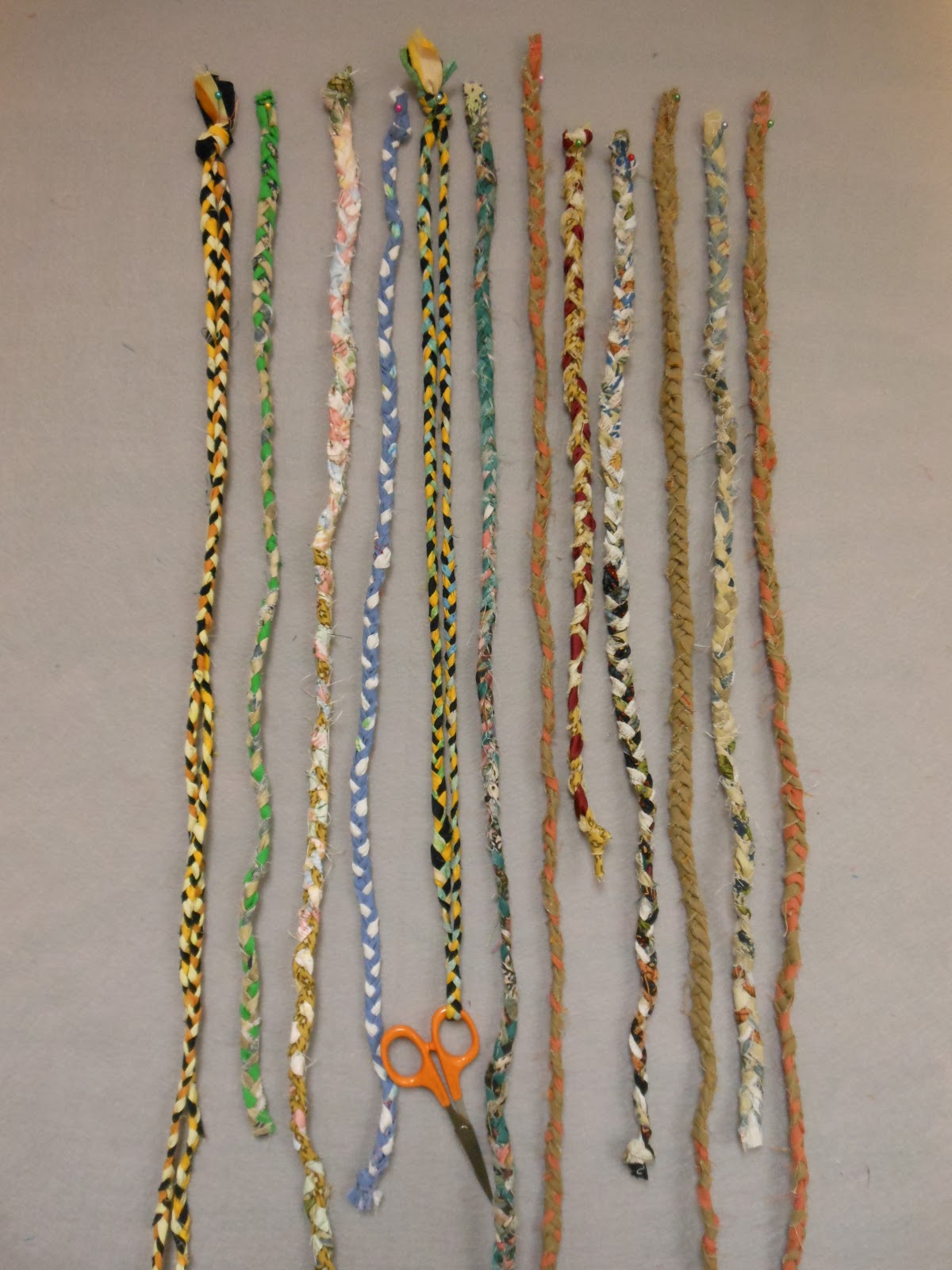
12 braided cords


but no partridge in a pear tree


Monday, December 10, 2012

When bad things happen to good products

I've been buying Red Heart acrylic yarn for four decades, give or take.  It's my go-to yarn for crocheting baby afghans, which I do in quantity, partly because it's totally machine washable.  I've bought it by the bushel, in many different colors, and enjoy the flexibility to mix and match from different skeins in the same project.

In the last couple of years I haven't been doing as much crochet as I used to do; I've been making a lot more hand embroidery projects that occupy my TV watching and family conversation time.  But I have noticed that the occasional skein of Red Heart seems to be stiffer and scratchier than the yarn I'm used to.

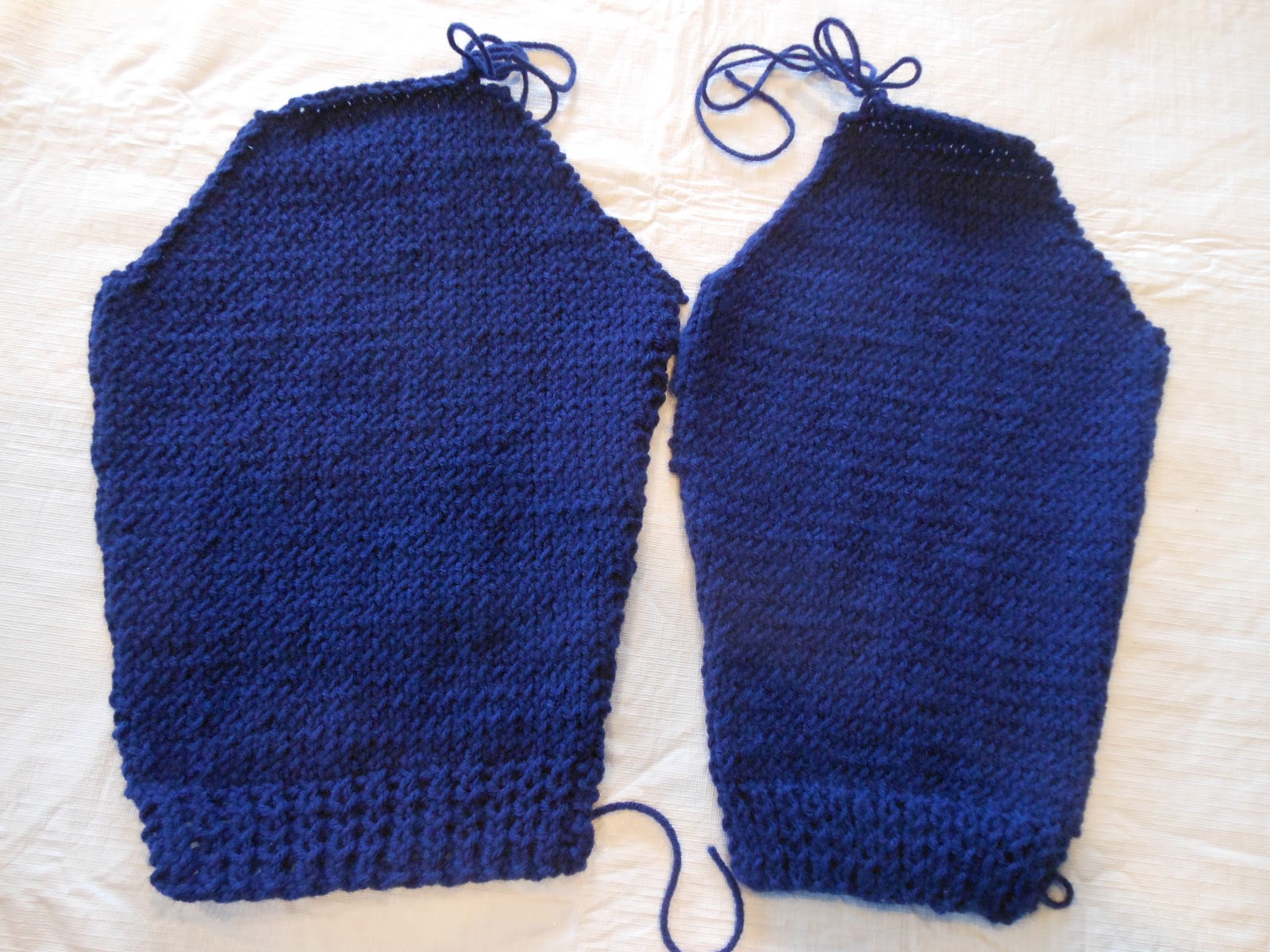
Last week, though, I got a stark object lesson in the degradation of one of my favorite brands.  My friend had bought a couple of skeins to knit a sweater for her grandson, and when it was time to sew the pieces together, to her dismay, here's what the sleeves looked like:

The bigger one was stiff and scratchy, while the smaller one was softer.  Although she hadn't noticed it while she was knitting, when we compared the two yarns we could tell the difference by feel.

Ironically, this yarn is sold under the rubric of "No dye lot," so you can theoretically buy multiple skeins of the same color and not have to worry that they won't match perfectly.  Well, the color was the only thing that did match in this project.

Caveat emptor.  Red Heart has tainted a previously fine product.  If you buy it, give it the feel test, especially if you're buying more than one skein.  If you have a choice, go for the softer "original" version.  The stiff, scratchy yarn isn't quite as nice.


Monday, July 16, 2012

Snobbery

When I wrote last week about having bought some fabric at the Big Fabric Store, somebody posted a comment that read, "I am surprised that given your disdain for anything not up to your standards of "art," that you would use sub par fabrics like those you find in that 'Big Fabric Store'....  considering the time and effort I put into my work, I wouldn't consider using low quality fabric."

I replied that fabric quality isn't all that important to me, for a couple of reasons.  First, most of my piecing uses  quite tiny bits, which doesn't give bad fabric all that much opportunity to misbehave or look limp and cheesy.  And second, I never wash my fabric, before or after construction, so there's no opportunity for it to bleed or fray.

But the comment got me to thinking about snobbery.  We all are snobbish about certain things, totally laissez-faire about others.

I'm not very snobbish about materials, beyond never using polyester batting.  I'll use the cheapest fabric I can get away with, which means innocent till proven guilty.  (On occasion I've cussed at certain faults of low-end fabric, but high-end fabric has its faults too, including the price tag.)  I love Aurifil thread, but am willing to use Coats & Clark if that's a color I need.  I own a huge supply of a relatively low-end machine embroidery polyester thread, which I use for quilting, because it works better in my machine than a lot of higher-priced specialty threads.

I'm a bit more snobbish about my tools.  I love my Berninas and am spoiled by their performance and features; once took back a lower-price machine, highly recommended by many quilters, after owning it five days and deciding it was just too clunky.  I've never had the urge to see if needles other than Schmetz might work just as well.  I won't touch those cheap, small, dull-from-birth seam rippers.  I have great lighting above my worktable and my machine.  But I buy mid-range irons, content to replace them when they die, and mid-range scissors (I am a snob about having many, many of them so one is always within reach).  And rather than invest in a gorgeous studio, I have a jerry-built operation in which a card table is an essential part of my sewing surface and the design walls are just panels of insulation board propped against the wall.

But where I'm a real snob is about process.  I believe passionately that piecing is far more elegant than fusing, that it's essential to be meticulous about pressing, that a quilt should lie flat on the wall, that the corners of a faced quilt shouldn't be any thicker than the middle.  I believe that when you get stuck on a project you should put it up on the wall and wait for the fabric to speak to you.  I believe that you can and should work on several things at once. I could probably think of many other examples.
Once a big discussion broke out on the Quiltart email list about people who still regard hand quilting as aesthetically and morally superior to machine quilting and whether such traditionalists deserved to die.   My take was that they were wrong about hand quilting but that I could cut them a lot of slack about love of process.

Many people love or hate process as much or even more than they do product.  For example, fly fishermen on foot in hip waders feel superior to guys in boats, who in turn feel superior to those in boats with sonar.  Bow hunters feel superior to hunters with guns, who in turn feel superior to guys who drive their pickup trucks out and blind deer with spotlights.  Cooks who make their own pasta feel superior to those who buy fresh pasta from the grocery store, who in turn feel superior to those who buy pasta in boxes, who in turn feel superior to those who have Domino's bring over some penne primavera.  People who do their own taxes in pencil on paper forms feel superior to those who use TurboTax, who in turn feel superior to those who go to H & R Block.

I bet every one of us has our own little process prejudices somewhere deep inside, whether they have to do with quilting, hunting, fishing, cooking or what have you.  We all love to feel superior to somebody else, and process is probably a less harmful criterion for making such judgments than gender, sexual orientation, race, religion or others of the more popular rationales.

What are you snobbish about?  What don't you care about?  I'm sure your mileage will vary.


Monday, March 26, 2012

Spool story

Coats & Clark, the thread manufacturer, is celebrating its 200th anniversary this year.  The firm started in Scotland, came to the U.S. in the mid-19th century, and is still going strong.  I  happened upon a special anniversary section of its website the other day and spent many pleasant and some frustrating minutes looking through its history.

You will drool over the photos of old sewing machines, thread cabinets, sewing notions and, of course, spools of thread.  If you don't want to take the time to visit their website, I'll give you the second-best Coats & Clark nostalgia tour from my own collection of sewing memorabilia.


Unfortunately, you will gnash your teeth trying to figure out the details of the company's history, as many fun facts are as cleverly hidden as Waldo.  Each page of the site has big arrows left and right, which you can use to move forward and backward in time.  But each one also has tiny arrows which you can use to find more info from the same time period.  It took me a whole lot longer than I should have spent on the site in toto to discover the second set of arrows.

The best joke in the website came at the very end, where they show an array of spools from then to now.  The copy reads:  "Gold metal spools replaced wooden spools.  These were soon replaced by plastic spools."

I don't know how old you have to be to remember the gold spools, but they haven't been gone all that long -- it took me less than two minutes to find a representative sample in my own thread stash.

And no, the gold spools are not metal.  They're plastic.

Which makes me wonder who put together this website, and who at the company approved it before it went live.  Surely in a company celebrating its 200th anniversary there's somebody around who sewed with their thread in the last decade or two.


Tuesday, February 14, 2012

My new toy

As any machine sewist knows, you can't go anywhere without your seam ripper.  But since said tool has a very sharp point (if yours doesn't any more, throw it out and buy a new one) it's a little tricky to transport it to workshops or other venues.  My typical solution was to get an old wine cork and jam it on the sharp point before I put the ripper in my bag.

That works fine, and has the additional benefit of being no-cost.  (If you need a cork, let me know and I'll be happy to send you three dozen or so.)

But when I taught a workshop last year, I was totally thrilled to be given a present: a new and improved seam ripper that protects itself (and you) when you're not using it.

Here's the ripper in defense mode:

And here it is open for business:

You'll notice how tiny this little baby is, which can be a problem when it hides under your fabric.  But who could resist this adorable toy?  And it has a skinny point and sharp blade, extremely helpful when you're doing fine piecing. 

Thursday, February 2, 2012

Spool mania

Zipping through the aisles at Hobby Lobby the other day I was astonished to find this product on the shelf:

That's right, it's three tiny wood spools.  You can't see from the photo, but each one is wound with some kind of threadlike material, not actually thread but larger strands, some metallic, some that looked like plastic coated wire.

I didn't examine them closely enough to swear in court, but I'm sure the spools are new, made in China to resemble real spools.  This stuff is sold as "mixed media artist materials."

I am a wood spool aficionada and when I see my favorite things on display I perk up.  Back in the day when all thread came on wood spools, I was careless.  I threw them away when the thread ran out.  Or I would use them as craft bases, sometimes painting them, sometimes gluing yarn or paper to them.

Oh, I shudder to think of the spools that I disposed of or ruined.  I don't remember exactly when it dawned on me that wood spools were things of the past.  At some point thread started to come on plastic, and to my credit, fairly soon I realized I should be saving the wood spools.  I still owned many from my own stash, and I commandeered all I could from my mother, my sister and unsuspecting friends and relatives. 

I'd grab them at grab bag.  I also started buying them at flea markets.  A decade ago, on a good day, you could get a bag of spools for a dime apiece, some empty, some with thread still on them.  Then the price crept up and up, out of my range.  Occasionally I'd score a batch from some back alley source. 

For instance, once I was visiting a sewing circle at a church and the ladies showed me a big pile of stuff that they were going to sell at a bazaar the next week.  Including four shoeboxes of thread, some on wood spools -- you could tell it was very old because spools and thread alike were stained.  I tactfully pointed out that thread that old wasn't good to sew with, volunteered to separate the wood spools from the plastic, and had to force them to accept my money so I could take the wood spools home.

I bought two old thread display cases, which hold many but not all of my spools, and I enjoy arranging the spools by color and size.  You can almost imagine how the case looked in its first life.

Bet you didn't know that the standard Lily spools are a hair shorter than Clark's; I didn't know either until I realized that I had to sort by brand to pack my cases.


Many others go in old type cases; large spools are arrayed on top or on cords.


Considering that my price point for antique spools has been ten cents, I had sticker shock looking at the faux spools at Hobby Lobby, $1.86 apiece.  Of course that included a little bit of faux thread that had to be wound onto the spool by a slave laborer in China. 

Of course the "artists" who buy this stuff probably wouldn't know the difference between a faux spool and a real one, but wouldn't it be nice to think that I could disassemble my collection, package the spools in little bags of three, and get two bucks apiece?