Showing posts with label books. Show all posts

Sunday, September 19, 2021

Lots of comments

There were lots of comments on my two latest posts, and rather than just leave a reply comment of my own, where probably nobody would see it, I'll take this post to reply to everybody. (That's one feature that I like in Instagram: if you comment on a post, and subsequently somebody -- the original author, or another reader -- replies or likes it, the system will tell you, even if your comment was made long ago.) 

I wrote about all the reading that I've been doing since lockdown, and how I have come to like e-books better than paper.  Shasta Matova commented:  "There is a time for both, so I don't try to make a choi8ce, but I too like ebooks especially when the library is closed.  Besides the benefits you mentioned, they remember where you left off and give you definitions for words I don't know."  

Idaho Beauty wrote:  "There are times when (e-book) is the only way I can get a book through my library but I don't enjoy it nearly like I do holding an actual book and turning the pages by hand rather than by swiping (and I do hate that sound that is sometimes added to mimic the sound of an actual page turning)."    

Idaho, I too would go crazy with that kind of sound effect.  I always keep the sound turned off on any kind of device, turn it on only if I want to hear something.  I'm sure there's a way you can adjust the preferences in your ebook to deep-six that feature.  It took me several months before I figured out that I could stop the system from showing me passages that other readers had highlighted!  First off, I don't care what other people choose to read and remember, and second, I was really cheesed at how stupid most of the highlighted passages were.

I also wrote about my newest quilt project, a memorial marker for all the U.S. military dead in Afghanistan since 2001, as well as memorials to those dead from covid.  Robbie commented: "I applaud you for all your effort on these projects!  Hope they can all be displayed and appreciated by so many."  Norma Schlager wrote: "I especially like that you are using uniform material on one side and other fabrics on the back.  Can't wait to see how this one turns out."  Martha Ginn wrote:  "Very appropriately dark, drab and sad -- an apt description of this conflict."


Cindy wrote: "I find your work a lovely tribute to those who are gone.  Not morbid in the least."

Irene MacWilliam wrote:  "I think my mind works somewhat like yours.  I am living in N Ireland and wanted to do a piece in memory of all those who had died in our 'troubles' conflict between 1969-1994... This piece has just been bought by our museum which has a collection to do with The Troubles.  I do a lot of work to do with conflict and how it affects families."   Irene, good for you!  I think that one of the most important jobs for artists is to witness to the stupid and destructive things that people do to one another.

Jenny wrote:  "Lest we forget: Afghan casualties from Western intervention amount to around 240,000 whilst Iraqis account for around 200,000...  a companion quilt perhaps?"  Jenny, you're right, war tends to be far harder on the civilian population who just happen to be standing there in the way than it is on the actual soldiers.  It has always been thus, but with modern weapons the killing power of each soldier is vastly greater than it was in past wars.  I can't imagine how one might go about marking that number of deaths; once you get into five figures the total has outgrown any technique that I might use.


Since I last posted, I've finished all the little bits for the Afghanistan memorial -- 2,461 is the number I'm going with. 

Thanks to you all for reading, and for commenting.  It's always good to hear from those at the other end of the cyber-talk!

Thursday, August 19, 2021

Plague diary -- reading

Reading has always been one of the most important parts of my life; I can't recall any time since age 3 that I haven't had a book nearby, if not actually in hand.  In fact, "bring a book" has always been my personal motto.  Although my home is filled with books, many of them unread, I really love library books.  And in the last year or so, I realize that I REALLY love library e-books.

When the public libraries were closed and staff furloughed for several months during lockdown, I had a momentary panic until I saw that the e-book collection was still going strong, with new titles added every day.  I read a lot during lockdown, almost all of it digitally.

When e-books first started to catch on, in 2006 or 2007, I often announced that I would not like them.  I said that I loved the feel of the physical codex, the turning of pages, the recollection of where on the page I had seen a name or reference.  Reading on a device seemed far less serious and pleasant than reading "real books."  But that changed when my sons gave me a Kindle for Mother's Day in 2014, just as we were heading off for a vacation to Britain and Norway.  I was hooked immediately, especially at the thought of not having to shlep a dozen books along on a three-week trip.

Since then my e-book habit has kept me in reading matter around the globe.  Because we refuse to pay the exorbitant internet fees on cruise ships, a shore visit would begin with finding the nearest wi-fi so I could get some new books.  Sometimes that was at a hot spot on the dock (where you would always find a bunch of crew members calling home), sometimes a nearby bar, where I could simultaneously download content and drink beer.

But at sea or ashore, I realize how much I like reading on a device.  It's easier to use at the table, where I do a lot of reading -- prop it in a little easel and it's perfectly on display.  You can read in bed after the lights go out.  


Best of all, you can search in the book to find out who in hell Geoffrey is, when he appears in the narrative after 200 pages of absence, or what exactly Geoffrey said when he was first interviewed by the police.  You don't need a bookmark, or worry that your bookmark will fall out.  You can mark any passages you like, even make rude marginal notes, without a pencil!


Since I started daily calligraphy two and a half years ago, I have written a passage from every book I read.  It's the first time in my life I've kept track of what I read, and I think just keeping the list has added to the reading experience.  If you want a recommendation, I have really enjoyed "The Premonition" by Michael Lewis, and "Nightmare Scenario" by Yasmeen Abutaleb and Damian Palette -- both about the pandemic and how the government dropped the ball on managing the outbreak.  Depressing reading, yes, but informative and thought-provoking.  Or if current events just have you spitting expletives, try "Nine Nasty Words" by John McWhorter, a linguist's take on the naughtiest taboo words in the English language.  Not for those who clutch their pearls upon hearing "darn it."

What have you been reading lately?  Anything about your reading choices or reading habits different now than it was before pandemic?  

Monday, May 24, 2021

A present arrives

I received a wonderful present today from Paula Kovarik, a great quilter whose work I admired even before we got to meet and become friends,  It's a small quilt, densely stitched, of course, since that's her modus operandi, but a bit different from her signature quilting in that it has no funny creatures, just straight lines.  In fact, the quilt is called "Sightlines," which I'll explain in a minute. 

I couldn't wait till I find a place to hang it, so Ken obligingly modeled the quilt right out of the box.


This quilt is special not just because I get to have another Kovarik original in my collection -- which is special enough right there -- but for how it came to be mine.  Paula has written a book about her quilting process, and I had the privilege of editing and proofreading it for her.  "Sightlines" is my pay for the job.  

Having read every word of this book four or five times, I am uniquely qualified to tell you that it's a fine piece of work.  It has several kinds of text: detailed stories about how she came to make some quilts, tutorials and exercises on how to emulate her style of drawing-through-stitch, thoughts on her creative process and why she works in this medium.  It will even tell you how to (gasp!) cut up and reconfigure quilts that you're bored or dissatisfied with.  (Paula even did this with a Quilt National piece after it came home from touring.)

The book is called "At Play in the Garden of Stitch: thoughts that come while eyeing the needle" and it should be ready to purchase very soon.  (One advantage of self-publishing, which I shared with Paula while she was still in the planning stages of this book, is that you don't have to wait for months and months for a publisher to slot you into a huge schedule.)   I'll let you know when that happens.


But back to my new quilt.  Paula pieced the quilt from her scrap bag, and when it came time to quilt it, decided to not just stitch on all the pieced lines, but to extend those lines all the way to the edges of the quilt.  That led to a very dense network of lines, which made a web of interesting shapes, especially in the large black and white areas of the quilt.  Wherever she saw a triangle, she filled it in with dense stitching in gold.  

The gold areas jitter, giving excitement to the plain white foreground and making the black "sky" alive with sparks or fireworks or maybe auroras.  I can't wait to get this quilt into a permanent place so I can see it every day. 

Thursday, March 4, 2021

A year of work

More than a year ago I saw photos in the newspaper of people lining up to vote in the New Hampshire primary, the first election of what was obviously going to be a big election year.  Since I am an election junkie, and absolutely love everything about voting, I had the idea to cut out the pictures and use them in a big artist book.  Soon the rules for this project became clear: I would collect every photo of people voting in 2020 that was published in either the New York Times or the Courier-Journal, the two papers that we receive every day.  

Eventually I realized that sometimes voting pictures were back-to-back on the same piece of paper, in which case I would try to choose the better photo.  Once when the NYT published a whole Sunday magazine worth of pictures of people voting and counting ballots, I was lucky to get a second copy of the magazine from a friend so I could use both sides of the pages.

Several months later I decided I better start assembling the actual book.  The pictures were piling up, and I wasn't sure how to display them.  Simply pasting them into a scrapbook seemed kind of lame -- a book, yes, but not an artist book.  And it looked like there were going to be a LOT of pictures, so how big a scrapbook to buy?  And in the midst of pandemic, I didn't even want to go to the store.

Then an inspiration.  When I retired 20 years ago I brought home with me a lot of obsolete office supplies that I knew would just be thrown out when I left.  One of these was a big stack of continuous feed printer paper (you show your age if you remember when printers had sprockets on either side to pull the paper through, and after printing you had to tear off the side strips and separate the pages).  And I decided not to use glue stick to put the pictures into the "book," but sew them in.  

Time passed and every now and then through the summer I would spend a few hours sewing pictures into the book.  It seemed to be an appropriate activity for pandemic lockdown -- every day something new to add to the pile, no end in sight.  I fine-tuned the definition of what would go in the book a few times -- people voting, of course.  People standing in line to vote, yes.  People waving campaign signs outside the polls, no.  As pandemic made many states expand their mail voting, I expanded my definition to include people mailing ballots, people collecting ballots from mailboxes, post office trays of ballots being sorted or delivered.

I had envisioned that the project would end on November 4 or 5, but that didn't happen -- every day were more pictures of people counting ballots.  Earlier in the year I had decided that counting ballots was fair game for the book, and there were plenty of those as November wore on.  But people protesting the ballot counting, no.  Then there were lots of photos of electors voting on December 14.

And even then, the election wasn't over!!  I debated with myself and decided that the Georgia Senate runoff elections were part of the 2020 voting, so I cut out those pictures as well.

And finally yesterday afternoon I sewed the last photo into the book!  Here my husband is looking through the book.  You can see the red thread that sews everything in, with hanging ends where I had to start and stop.


PS two hours later I found a newspaper on my pile from a couple of days ago with a photo of people voting, accompanying a story about the Supreme Court taking up a voting rights case.  Sure enough, they were voting in the 2020 election, which meant that picture should technically be in the book.  And yet my last page was so pretty, so carefully chosen -- I didn't want to make a new last page with a quite ordinary picture. Should I go back and try to find a place to sew it in, on an earlier page, or should I forget about it, since the book was already finished when I found it?  I will think about that for a while.  

Tuesday, October 29, 2019

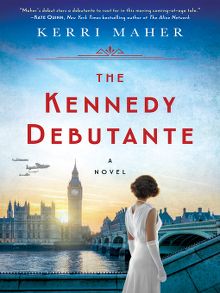
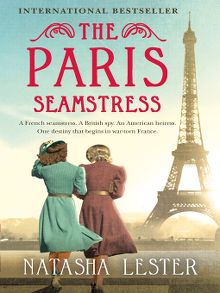
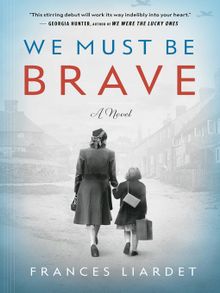
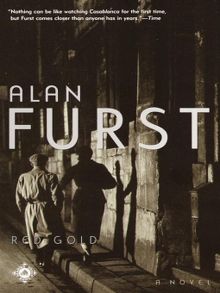
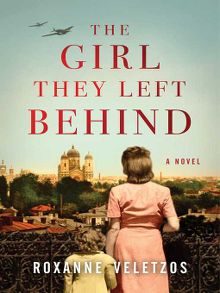
Trends in cover design


I was looking to borrow a new E-book from the library and saw that they have a "collection" of more than 100 books of World War 2 fiction.  Recent fiction about WW2, that is, not fiction written during WW2.  And I hadn't scrolled very far down the page before I started noticing a trend in cover design.

Perhaps you can notice it too:


Until now, I did not realize that WW2 fiction is so popular.  Nor did I realize that we apparently have no idea whether people in those days even had faces, let alone what they might have looked like.


Tuesday, October 8, 2019

Calligraphy update -- book reports


Every time I finish reading a book I find a representative sample passage to copy as my daily calligraphy.  Not only does this give me something new and different to write, it is serving as my reading diary for the year.  I've always sort of admired this practice in other people but never kept track of the bazillions of books I have read myself.  So this is a new and surprisingly satisfying side benefit of my daily art.

For the first nine months of the year I can report that I have read 60 books: 40 were fiction, 19 were non-fiction, one was poetry (and I cheated -- I calligraphed poems from that book on several days).  I am chagrined to report that for at least four of the fiction books, I had no recollection of the plot as I looked back to write this post, even after reading the copied passage.


Some of the book passages were almost illegible, as I was practicing a compressed italic hand that dispensed with spaces between words and line-ending hyphens (illegible, but they looked pretty).  Or letting the letters splay every which way across the page.


Some were quite readable, as I was practicing my channeling-Julia-Warhola handwriting with lots of curlicues.


At least one was deliberately atmospheric, with wispy brush-drawn letters echoing the fog described in the passage.

If you'd like some recommendations, in the fiction department I especially liked "Fake Like Me" by Barbara Bourland, the best fiction I've ever read about artists and how they work.

Many more to recommend on the non-fiction side of the aisle.  "Educated" by Tara Westover is a memoir that some of my friends found hard to read but I had no such qualms, looking forward to the happy ending.  "White Rage" by Carol Anderson is a dense, scholarly and eye-popping look at how Americans have discriminated against blacks throughout our history.  "American Dialogue: The Founders and Us" by Joseph Ellis examines several key concepts behind the Constitution and how they play out in today's political theater.  "How to Disappear" by Akiko Busch is a collection of essays about privacy, memory, identity and mystery.

I look forward to the next three months of my reading diary, because of the calligraphy and because of the books themselves.


Saturday, September 28, 2019

Last week on Art With a Needle


What a wonderful week of art I've had!  I went to northern Michigan to visit my sister and since I am still laid up with the broken ankle, I mainly sat at the table and did art while other people occasionally brought me food and drink.  So my foot feels a whole lot better with so little walking and standing.

The week was mainly spent in parallel play. 

My sister is still winding up chores and paperwork from her husband's death, so she spent a lot of time on the phone with insurance companies while I did hand stitching.  Very companionable for both of us; just having somebody else in the room when you're performing a solitary task is so good!  We talked while she was on hold, stopped talking when one of us needed to concentrate.  One day I did a lot of her piled-up mending while she cleaned up the sewing room; much more talking this time.  And when I worked on my daily calligraphy she brought out her sketchbook and tried out the same techniques.

mended: pirate costume, two pairs of shorts, yoga pants, blouse, hanging clothes hamper, nylon tote bag
Speaking of calligraphy, Gail left a comment that maybe I could resurrect my broken crow-quill pen by putting a new grip on the old handle.  I wish -- but I think I'm better off buying a new pen and, as Susan suggested in her comment: "maybe some broken type, some frayed fabric, a broken quill pen, a new piece of art!"  If I have to futz around and make stuff with old broken things, I'd much rather end up with art than with a repair that I'd probably screw up anyway.

Gail commented earlier in the week, "I wonder if there isn't some obscure law that requires substitutes for the full spelling of some words on book covers?  You know, like the 7 forbidden words on TV that George Carlin had a whole routine about."  Short answer to that: no there isn't.  Government "shall make no law... abridging the freedom of speech, or of the press...."

Yes, it's possible that a book could be considered obscene by the local police, under the famous definition articulated by Justice Potter Stewart in 1964: "I know it when I see it."  Language on broadcast TV is still regulated by the FCC, but standards are looser than they used to be, and cable and satellite TV have even fewer rules.  (If this topic interests you, here's a long but readable and up-to-date article from TV Guide -- click here for the link.  I recommend despite the hackneyed asterisked title.) 

Anyhow, here's my favorite miniature of the week: